The economy is designed to kill working people. Watch this video of a highly educated man that has three degrees, has worked for the best of the best, and is now homeless.
https://www.youtube.com/watch?v=8eNPAH46oI8
Monday, July 11, 2016

Friday, June 24, 2016
Commentary on Noam Chomsky's Quote
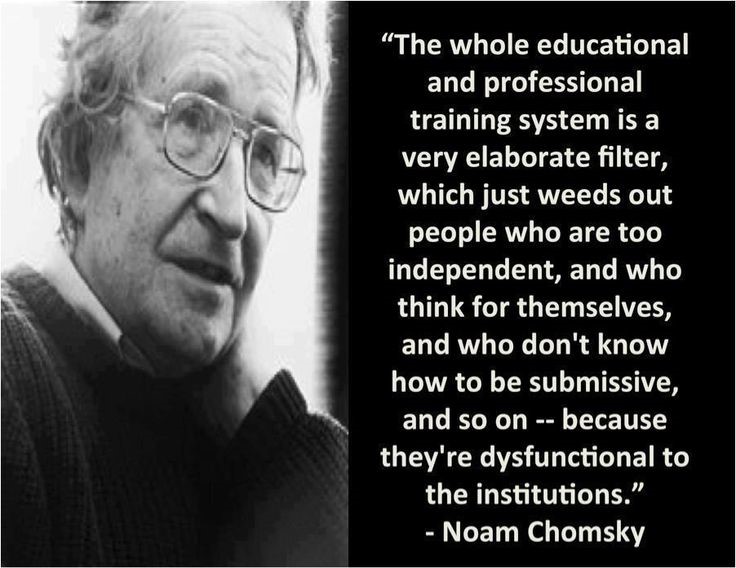
I think the intent of this isn’t to say that we shouldn’t go to school or college or that we shouldn't get a job and keep it – but it’s to say that it is perfectly legitimate to recognize the difficulty in living within the confines of these institutions while agreeing with their values wholeheartedly. In fact, if you do that, there might be something the matter with you. The truth is that these institutions are contrived, they are targeted to keep a few people at the very top very wealthy, and it takes a great deal of self-sacrifice and handing-over of personal morals and values to continue to stay within these institutions. The longer we stay, the more weary we get. If we are indeed in a position to be an observer from within the institution, and want to continue to stay there, then it certainly helps to remember what we’re getting out of the deal. But sooner or later we realize that there isn’t enough for us, that there never was, and there never will be. Those of us who wake up early, suffer more intently. Those of us who think we have woken up, look around us and see a sea of seemingly happy, smiling faces and cannot reconcile the vast gap between “the Others” and ourselves, and so we quickly try to get back to sleep. But the damage has been done; we’ve already woken up, and try as we might, sleep eludes us. Every mark of society serves as a reminder of the dream we are being lulled into. Starting with commercials where an emaciated young girl holds a bottle of Coca Cola and promises that this sugar laden drink will not keep you obese, to the farce of the American presidential elections where two extremely wealthy, corrupt and seemingly insane individuals are vying to be the next police commissioner of the world. The brand new cars that line the streets make us wonder who can afford a new car every five years. The million dollar houses make us ask how the owners can afford it. Are these the people benefiting from the corporate structure? Are they truly benefiting? Are they not, perhaps, the greatest victims of them all?
Thursday, April 21, 2016
A Beautiful Poem to deal with Pain and Loss
The Guest House
by Rumi
This being human is a guest house.
Every morning a new arrival.
A joy, a depression, a meanness,
some momentary awareness comes
As an unexpected visitor.
Welcome and entertain them all!
Even if they're a crowd of sorrows,
who violently sweep your house
empty of its furniture,
still treat each guest honorably.
He may be clearing you out
for some new delight.
The dark thought, the shame, the malice,
meet them at the door laughing,
and invite them in.
Be grateful for whoever comes,
because each has been sent
as a guide from beyond.
Wednesday, April 20, 2016
When You Grow, You Have To Mourn; Losing Your Old You
It feels like saying goodbye to your most trusted friend. The one who was there for you through thick and thin. But it isn't that, because you are always with you. What you're mourning is the identification with your thoughts, opinions, beliefs, dreams, ideology, rules, rights, wrongs.... all the things that made up your identity. That's what you're saying 'goodbye' to... not yourself.
And if you only have your self at all times, everything else is replaceable. Beliefs are replaced almost daily, ideologies are a fashion, opinions dance in the light, thoughts flow like the river, rules are different in different lands, rights and wrongs are in the mind of the beholder. All these are what you are saying goodbye to. When you see it like that, it almost seems silly that we mourned it. But we do need to mourn it because that is what we thought we were.
You're also saying good bye to the familiar, to the battles you've fought and the wars you've won or lost. You're saying good bye to the people and places you love and hate. And you're saying goodbye to the experiences you married.
Just remember as you mourn, that those experiences are always going to be a part of you... you don't need to hold on to the memory of them. You are already shaped by them. They've become a part of you... for the better. No matter how nasty the situation, you've stepped one step closer to the real you. The powerful and naturally perfect you.
I was glad to realize that all feelings are neither good nor bad. Sadness isn't a bad thing. If you are faced with feeling a negative emotion, go to a private place and FEEL the emotion fully. Be brave and do it. You know what will surprise you? That once you truly let that emotion flow through you, it passes through incredibly quickly. Within 3 seconds it's gone. But resist the emotion and you'll be stuck in a karmic infinite loop of reliving that emotion frequently. The same situation will revisit you until you fully feel that emotion.
I feel like bullying is just that. We resist the emotions that came to us when we were first bullied. And then in our lives, we revisit that bully over and over again. Different jobs, different cities, different relationships - there they are: the bully. The way to break this karmic ground-hog day is to fully feel any emotion you feel when you're being bullied. Once you feel that emotion fully, do The Work (by Byron Katie) and then once you feel completely cleansed and unburdened of those feelings, Focus on something you LOVE. Focus on someone you adore, or something that delights you. And suddenly you'll come out on the other side with a solution to your problem. Often, the problem simply disappears.
Love this guy: Jason Garner. Read a beautiful post by him titled:
More Job Losses In Alberta
The end of this isn't even near yet:
http://calgaryherald.com/business/energy/husky-energy-chops-positions-in-latest-round-of-cost-cutting
Published on: February 9, 2016 | Last Updated: February 9, 2016 4:35 PM MDT
Husky Energy confirms jobs eliminated in latest round of cost-cutting
http://calgaryherald.com/business/energy/husky-energy-chops-positions-in-latest-round-of-cost-cutting
Published on: February 9, 2016 | Last Updated: February 9, 2016 4:35 PM MDT
Wednesday, February 10, 2016
Don't Leave Your Corporate Job
Don't leave your artificially concocted identity. Don't step out of the comfort of believing that someone else knows EXACTLY who you should be and what you should be doing. Don't defy the heartless, soul less perpetrators of the myth of your existence and limited usefulness as a cog in a money-making juggernaut.
If you leave, you'll be left standing alone wondering who you are and where you are supposed to go. You'll be left with fragmented memories of who you thought you were as a child and a teenager. You'll suddenly realize, to your terror, that your identity has not been authored by you, but by the HR department, your boss, his boss and the CEO.
And I don't even watch TV. I can't imagine people that step away from their television sets for a day. They must have withdrawal symptoms from not knowing exactly how they are supposed to act, what they are supposed to say in a theatrical mockery of life. When I see people interacting in social settings, I notice everyone plays a part, assumes a role, and we all pretend to be someone we are not. We are full of narratives in our head about who we are supposed to be, who we desire to be, but in fact ARE NOT anything like we imagine.
How would a bee feel if he ran away from his hive, in defiance. Where does he go now? What does he do? What is his purpose? Does he even have one outside of the hive?
I am reminded of 'Red' from the Shawshank Redemption after he was released from prison on parole. First he couldn't believe it.
Second he was happy.
Third - he didn't know what to do with himself. He was bored. He was lonely. He needed permission to go to the bathroom. He needed someone to tell him why he was there at all.
I've gone through exactly the same three steps above. Some mornings I wake up in disbelief that I'm no longer in the monstrous hell that was my job. No more public humiliations. No more 80 hour weeks. No more starving till 9:00p.m in the office alone, occasionally rejoicing if I found a granola bar. No more dark empty offices with just my area lit up - night after night after night after night after night after night after night....
No more meetings with zero time to prepare. No more workplace bully who made my life a living nightmare. No more verbal abuse from the supervisor. No more unreachable deadline piled above another unreachable deadline. No more lying managers. No more.
I am relieved. I am happy. I am feeling free.
But I am feeling lost. So terribly lost.
Saturday, January 30, 2016
LEAVE Your Misery Behind: When To Quit Your Job And When To Stay
There are varying degrees of misery in the corporate world. I will write about a few of them here, based on my own experience. Some warrant a departure from the job. Others do not. I will provide a rating for each with Low for Don't Leave Your Job and maybe find ways to mature personally, Medium for Look For a Lateral Move or a Better Job and High for RUN FOR YOUR LIFE. I mean that last one. There are some jobs that are absolutely toxic to who we are as humans and everything we stand for.
When I say 'Run For Your Life' I mean that in order to preserve your humanity, dignity, self-respect, confidence, to protect or recover the trust you had in yourself and in order to invest in your future by nurturing your present: You have to get away from your job at any cost.
(a) Occasional Annoyance (Low): It happens. There is always an annoying co-worker who rubs you the wrong way 20% of the time. This is okay. It just means that you have an opportunity to open your mind to a different personality. It also means that you're human and that you are perfectly OK as you are. You don't need to like EVERYBODY and they don't need to like you either. You do need to get along with everyone at work in order to finish a project satisfactorily. So do it. Read some books on personal development. Or ignore your undesired people. Focus on the things you love about your life, your job, your routine (or lack thereof), the people you love in your life (or lack thereof). Take vacations, enjoy life, treasure your good days at work.
(b) Serious Disagreement with A Co-worker (Low): If this person is an equal in your company's hierarchy, and you are working with more people that this one person, learn to grow from this experience. If they are an equal, learn better communication techniques. Open your mind to new ideas. Hate his guts? Try to stop focusing on him when you are on your own. Don't just foolishly ignore him/her. When you are with him, observe his behaviour objectively. When we see someone we hate, we see something inside them that we dislike about ourselves. This is the rule, not the exception. Use 'The Work' by Byron Katie and open your eyes to something very deep and profound within you. This is an opportunity for Enlightenment. Don't pass it up.
(c) Occasional Disagreement with a Senior Co-worker or Supervisor (Low): This is actually a learning opportunity. The assumption here is that there is no verbal abuse involved, just disagreements. The situation is that your supervisor wants something done a certain way, you disagree, you have voiced your opinions (or not) and supervisor sticks with his decision. In life, this happens. If you are a junior or intermediate engineer, this happens a lot. You have a lot to learn and a senior engineer has a lot to teach you. Learn, learn, learn. You may be confident, but be grateful that someone may show you the ropes. Your ego is good and serves a purpose, but there is no need to stroke it 24 hours a day. Healthy self-confidence is to be applauded. But blinding conceit (which happens to us all) can be met with a healthy alternative of objectivity and a curious nature. Nurture those good qualities in yourself.
(d) Frequent Disagreements with multiple co-workers (Medium): This is a sign. It's a sign that you have values, a method of doing things, and those are incompatible with the people you work with. It's natural. It's human. It's draining for the black sheep - but there is nothing wrong with you. You just quack when others neigh. Find another job. Try out a different department within the same organization. Change is inevitable. It's hard to accept, but try it. You are bound to grow - whether you initiate the growth opportunity or the growth opportunity comes to your door step.
(e) Disagreement with Company Policies (Medium): This is a deep problem. If you see that your values, ethics, reasoning, judgement are being opposed or violated, it's time to find an organization that is compatible with who you are. In a shitty economy, don't quit your job. Keep applying for new jobs and keep looking for the right place to be. If you are in a large corporation, find a small company. If you are already in a small company, try for another small company. NEVER will I recommend that anyone move to a large corporation to find people who honour values, ethics and sound judgement. It just doesn't happen.
(f) Tough Commute (Low - Medium): I've spoken to people who have moved jobs to accommodate their daily schedule. I was actually stunned when I heard this. But I later realized that some people don't really give a shit about what they do all day as long as the hours are reasonable and they get a pay check. Weekly donuts, monthly birthday parties, all these contribute to their overall happiness. They don't take life too seriously and are happy. If you are one of those people, then sure... find another work place to improve your commute. If however, you value your work, do get along with your co-workers, are challenged with your work or are pretty okay with your salary - then don't change jobs. Having even a few of the things I mentioned above is a stroke of luck. Consider moving residences.
(g) You Want A Little More Money (Very Low): This is the worst reason to quit your job. I'm not talking about a $50,000/year raise. I'm talking about $2,000 a year. You'll not even see it on your bi-weekly pay check. I only listed this point because my father's ex-coworker did leave a decent job for a raise of $2000/year. 8 months later they laid him off. Needless to say, this is a stupid reason to leave.
(h) Over Work (Medium - High): I have been overworked most of my life. I have traditionally worked 50-60 hours a week, and got paid for 40 most of the time. It set a very bad foundation for my adult-life-experience. But strangely enough, back then I didn't really mind it. I got paid for it some of the time (when budgets allowed) and I learnt everything very quickly. I managed to keep my work quality high, which was important to me. I occasionally worked the 80 hours, but it was a one-off incident yearly, which I thought was a "no biggie" sort of deal.
Then I joined that last company I worked for. By week 3 (after starting), I was working 60 hours a week. By the end of the second month I was working 80 hours a week. I didn't complain until 2 weeks later when I was given even more work. 100 hours a week. At last, when I realized that I would have to stay a total of 120 hours at the office that week to finish the work, I protested. For the remaining 9 months I worked 80-100 hours a week. I spoke to management every month about reducing my workload. On month 7 or 8, I developed chest pains. When I asked for help, they laughed at me. The most senior manager never got to work a minute before 8:00 and never left a minute after 5:00. But he laughed when I said that I can't do anymore 80 hours weeks.
(i) Abuse (High): Any form of abuse will destroy you.
You know why abusing children is heinous and infinitely worse than abusing adults? Because adults have the ability to walk away from that situation. If you being abused at work, recognize that you are an adult and that you are in a position to walk away. Take ownership of the situation. It would be best for you to leave the job.
Verbal abuse (in private or in public): Verbal abuse is intended to diminish your importance, make you feel smaller, and wrench power away from you. There is no circumstance where suffering abuse is a good idea. There can never be a holy intention where you were meant to suffer.
Bullying (being treated badly, being singled out):
Group Bullying: You will lose this battle. You cannot fight group bullying. You just have to protect yourself and leave. If you have been targeted by someone who feels threatened by you, and you are new to the organization - you are going to lose this fight. I do not believe that any institution has a system in place for you to be able to fight this.
Individual Bullying: If you have just one bully, you are not working regularly with your bully, and if they are an equal, then if you stick it out with your organization chances are that the bully will either leave or will get out of your way. I have seen this happen countless times. The bully tends to leave because they are more miserable than you are. Instead, focus on yourself: establish your reputation, your quality of work, and people within your company will value you for the work you do and what you bring to the table. When everything else is working out for you at this job, then don't let one bully deter you from building a successful career at this organization. You can even switch departments or offices if it still bothers you.
Life is meant to be good. There can be challenges now and then, but life is not meant to be excruciatingly hard. Suffering arrives in unpredictable ways. When people have to go through genuine suffering there is nothing they can do about it but accept it. And by this I mean things like war, holocaust, colonization, death of a child, being orphaned.
But for ALL THE OTHER TIMES there is choice. You Must Leave the abusive situation.
If you live in a first world country (like I do), and you are not leaving your job because of poor financial choices you have made, or low self-esteem then you have to take responsibility for your situation and face the fact that you are choosing to be abused. And you can CHOOSE TO GET OUT. Choose to honour yourself.
(j) Slander (High): If you are a professional, this is a career killer. If you have someone out to get you, you better get out. Run. Especially if this person is more powerful than you are and has a long reach within an esoteric community that you work in.
Our greatest glory is not in never failing, but in rising up every time we fail.
-Ralph Waldo Emerson
Wednesday, January 20, 2016
A Review: The Degradation of The Democratic Dogma
I stumbled onto a fabulous book credited to Henry Adams and published by his brother Brooks Adams titled, "The Degradation of The Democratic Dogma". I found it in the References section on a paper discussing over-population. Henry Adams was the grandson of John Quincy Adams, the sixth President of the United States.
What a beautiful book. Looks like I'm only 97 years late to the party. The grandsons of the forefathers of America, the most prominent thinkers of their time, predicted the phenomena I'm witnessing today: The (predictable and inevitable) Degradation of (a theoretical and near-impossible-to-implement) Democracy. This phenomenon, that is extremely hard to deny, seems to have been successfully denied by the masses. Accomplished by burying one's head in the sand while the planet progresses into its eventual deterioration, ostrich-people carry on with their lives as if nothing unconscionable were happening and that "democracy" is well and truly in action. Well, at least I can (metaphorically) stop screaming from the rooftops, because even the great thinkers from 1919 couldn't manage to convince anyone that this just isn't so. The gentle voice of progressive thinking is drowned out in the great din of misinformation birthed by the government and propagated by media. And though the forefathers made some optimistically accurate predictions (Brooks Adams predicted New York would be the commercial capital of the world), no one really takes them too seriously when it came to their slightly grim musings.
Ah, humanity! How tightly you hug your monstrously ugly child: Ignorance.
Cynicism and hopelessness aside, I found a few points very intriguing:
(1) George Washington saw the University as the future of America. He saw it as the main avenue through which great ideas would be propagated to the people of America. Would I be stretching my imagination too far to say that he would want most Americans to be educated at a University level?
But alas, this is not the case. False ideologies, canned-thoughts, pop psychology, misinformation, government issued dogma and bigotry masked as patriotism are now propagated at full speed by popular media. I hardly count news channels as propagators of "news" anymore. They are just slightly serious propagators of the mass narrative. Soap operas are the most light weight medium of communicating the same narrative. One need no longer think for oneself. Even popular modern-day autobiographies read like trashy novels... filled with god-like role models, eventual pitfalls and midlife crises and the eventual and dramatic emancipation at the end of it all. And most throw some form of God in there somewhere.
(2) If we are to believe Brooks Adams' narrative, then the loss of the concept of a benevolent God had already sprung roots in the heart of John Adams (6th President of USA). The chaotic nature of America's growth, rooted in two of man's base feelings: greed and fear, had made the Adam's family doubt that the path of America was paved by a kind and compassionate creature such as God.
Absolutely right. Let us not confuse any God or Great Universal Spirit (that may or may not exist) with the unabashed greed and fear that motivates nearly ALL our actions.
(3) The book predicts that the world would belong to money-lenders (i.e. Banks). It predicts that because of this, any concept of democracy would be left behind in the dust. I wish I could tell these great forefathers of America how right they were. How right they were.
Below is an excerpt from a letter John Quincy Adams wrote to Reverend Charles Upham, February 2nd, 1837:
"The great object of my life therefore, as applied to the administration of the government of the United States, has failed. The American Union, as a moral person in the family of nations, is to live from hand to mouth, and to cast away instead of using for the improvement of its own condition, the bounties of Providence.
But, after all, was there a Providence."
The 6th President reflects, without hope, on the privatization of public land by President Jackson.
The author (Henry Adams) even claims that the president lost heart and lost his belief in God because the Almighty had allowed slavery.
This is so sad.
Friday, January 15, 2016
Painful Real Stories of Engineer Layoffs in Alberta
In 2008, when USA when through a housing crisis and an economic melt-down, the media stayed silent about the heart breaking stories of tens of thousands of families that lost their homes and were forced to live in slums; in dwellings made of tarp and cardboard. Only the independent documentaries covered these heart-breaking stories.
In 2002, when eastern Canada saw the hi-tech industry come crashing down, no one - not a single media outlet - covered the story of tens of thousands of people losing their livelihoods forever. No one interviewed a single engineering graduate to find out what was happening to several thousands of young adults who would have to give up their hard-earned degrees forever.
And now generalized headlines like, "Several people in Alberta have lost their oil & gas jobs" doesn't do the stories any justice. These are real people. They have complicated lives. For many, the fall is hard.
I'm going to talk about two who I know personally. If you want your story told anonymously, please contact me.
(1) A young male engineer. He entered the work force just over 5 years ago. His plan for success was "to make himself indispensable to the employer". (This is the same mistake that I made.) He worked hard, very hard. He tried to make himself indispensable to the employer. He took on responsibilities far beyond his comfort zone and he succeeded. He excelled at difficult tasks and so after 5 years, he was made project lead on a large project. And two weeks later, he was laid off. He had done everything right. He worked hard. He spoke politely to his managers. He made concrete career goals. He didn't cut corners. He dealt with suppliers and contractors cleverly. He made money on the project (i.e. no deficit in the budget). And? And he bought a home. And 4 months ago he had his first child. And today? He is unemployed.
(2) Female technician. Sacrificed several personal goals to further her career. Did not take breaks like she wanted to, so that she could continue on her career path. She worked incredibly hard. Had an unblemished resume - until August 2014 when she was laid off. Now she has a half-year gap in her resume which fills her with dread. In any industry, a half-year gap is the equivalent of career leprosy: No one wants to touch you. She has sold her home. And her husband works for half his wage in a far-off city.
Somewhere I read an obtuse article where the writer was "worried about staffing issues when the economy picks up". I think I mentioned it in one of my earlier blog posts. How about worrying about the people that don't have money to pay their mortgages? How about worrying about creating company policies that give employees a cushion (monetary and work skills) so that they can deal with economic down-turns successfully? How about generating some awareness for future employees on how volatile the oil & gas industry is? How about looking into the lives of the people that are being affected by this oil crash? How about some honest journalism? How about some basic fucking journalism? How about some empathy? Or has the soul-less, lazy, pathetic excuse of journalism you sell taken up so much of your time that you can no longer tell how you are now pandering the wishes of a soul-less corporate entity while stomping on the dignity and respect of real individuals? Pathetic.
I fumed at another recession related article I read today where an HR person said, "The best way to be recession-proof is to make yourself indispensable to your company.". Naivete does not excuse ignorance. I'm so sick of HR people pretending to work for the best interests of the employee whilst doing everything in their power to stomp on individual dignity.
Hear me again everyone: There is no shortage of Engineers on this planet. What there is also plenty of, is greed. Under-staffing problems are not because there aren't enough qualified people in the job market. It's because companies want to stay under-staffed to fatten their bottom line.
If only Engineers had the life-span of fruit flies. Then everyone in HR and upper management would be happy.
Thursday, January 14, 2016
Weariness
It is sad,
to have given so much,
that there is nothing left of you,
for yourself.
There is nothing left of you,
for those you love,
for those who love you,
and for those who want to love you.
It was yours to give,
and you've given it away,
to murderers and thieves,
to sycophants and liars.
And now you lie weary,
weary and still,
your heart is beating,
but barely.
Your soul injured,
your feet covered in thorns,
your spirit drained,
your desire turned to ashes.
We are born perfect,
I really see it around me,
children connect to vast reserves,
infinite wells of promise and energy.
I know that if I just lie still,
if I just keep breathing,
I will heal,
it is there...
I have run away,from those
who pushed me to the edge of the precipice
where I stood alone.
There is only silence here,
the beating of my heart,
the darkness around me,
and loneliness abound.
I have run away,
I walked within them
slowly at first,
then broke into a run as they clawed at my feet.
I fought
and I ran,
the clothes of my soul
caught in their lies, and in mine.
I can only hear my heart,
I no longer trust my thoughts,
I am the bearer of my soul,
And that is all that I am willing to do.
I can sense my healing,
it is coming to me,
in the silence,
my peace will join with me.
I have no one to trust,
I need trust no one.
I have only me,
I hope that I am enough.
A Poem For When You Feel Lost
Whoever Brought Me Here - Poem by Mewlana Jalaluddin Rumi
All day I think about it, then at night I say it.
Where did I come from, and what am I supposed to be doing?
I have no idea.
My soul is from elsewhere, I'm sure of that,
and I intend to end up there.
This drunkenness began in some other tavern.
When I get back around to that place,
I'll be completely sober. Meanwhile,
I'm like a bird from another continent, sitting in this aviary.
The day is coming when I fly off,
but who is it now in my ear who hears my voice?
Who says words with my mouth?
Who looks out with my eyes? What is the soul?
I cannot stop asking.
If I could taste one sip of an answer,
I could break out of this prison for drunks.
I didn't come here of my own accord, and I can't leave that way.
Whoever brought me here, will have to take me home.
This poetry. I never know what I'm going to say.
I don't plan it.
When I'm outside the saying of it,
I get very quiet and rarely speak at all.
A Gentle Poem of Hope for the Burnt Out
I'm burnt out. I feel lonely. I feel exhausted. I feel tired, and I don't want to take another step. Not even a step towards my own healing. I've given too much. I gave and I gave, even when I did not have it in me to give. And I did it for too long.
Is that what burnout feels like to you?
I found a kind poem today by John O'Donohue.
A Blessing for One Who is Exhausted
--by John O'Donohue
When the rhythm of the heart becomes hectic,
Time takes on the strain until it breaks;
Then all the unattended stress falls in
On the mind like an endless, increasing weight,
The light in the mind becomes dim.
Things you could take in your stride before
Now become laborsome events of will.
Weariness invades your spirit.
Gravity begins falling inside you,
Dragging down every bone.
The tide you never valued has gone out.
And you are marooned on unsure ground.
Something within you has closed down;
And you cannot push yourself back to life.
You have been forced to enter empty time.
The desire that drove you has relinquished.
There is nothing else to do now but rest
And patiently learn to receive the self
You have forsaken for the race of days.
At first your thinking will darken
And sadness take over like listless weather.
The flow of unwept tears will frighten you.
You have traveled too fast over false ground;
Now your soul has come to take you back.
Take refuge in your senses, open up
To all the small miracles you rushed through.
Become inclined to watch the way of rain
When it falls slow and free.
Imitate the habit of twilight,
Taking time to open the well of color
That fostered the brightness of day.
Draw alongside the silence of stone
Until its calmness can claim you.
Be excessively gentle with yourself.
Stay clear of those vexed in spirit.
Learn to linger around someone of ease
Who feels they have all the time in the world.
Gradually, you will return to yourself,
Having learned a new respect for your heart
And the joy that dwells far within slow time.
--John O'Donohue, from "Blessings"
--by John O'Donohue (Jul 26, 2011)

When the rhythm of the heart becomes hectic,
Time takes on the strain until it breaks;
Then all the unattended stress falls in
On the mind like an endless, increasing weight,
The light in the mind becomes dim.
Things you could take in your stride before
Now become laborsome events of will.
Weariness invades your spirit.
Gravity begins falling inside you,
Dragging down every bone.
The tide you never valued has gone out.
And you are marooned on unsure ground.
Something within you has closed down;
And you cannot push yourself back to life.
You have been forced to enter empty time.
The desire that drove you has relinquished.
There is nothing else to do now but rest
And patiently learn to receive the self
You have forsaken for the race of days.
At first your thinking will darken
And sadness take over like listless weather.
The flow of unwept tears will frighten you.
You have traveled too fast over false ground;
Now your soul has come to take you back.
Take refuge in your senses, open up
To all the small miracles you rushed through.
Become inclined to watch the way of rain
When it falls slow and free.
Imitate the habit of twilight,
Taking time to open the well of color
That fostered the brightness of day.
Draw alongside the silence of stone
Until its calmness can claim you.
Be excessively gentle with yourself.
Stay clear of those vexed in spirit.
Learn to linger around someone of ease
Who feels they have all the time in the world.
Gradually, you will return to yourself,
Having learned a new respect for your heart
And the joy that dwells far within slow time.
--John O'Donohue, from "Blessings"
- See more at: http://www.awakin.org/read/view.php?tid=736#sthash.Q1H7eQRR.dpuf
--by John O'Donohue (Jul 26, 2011)
When the rhythm of the heart becomes hectic,
Time takes on the strain until it breaks;
Then all the unattended stress falls in
On the mind like an endless, increasing weight,
The light in the mind becomes dim.
Things you could take in your stride before
Now become laborsome events of will.
Weariness invades your spirit.
Gravity begins falling inside you,
Dragging down every bone.
The tide you never valued has gone out.
And you are marooned on unsure ground.
Something within you has closed down;
And you cannot push yourself back to life.
You have been forced to enter empty time.
The desire that drove you has relinquished.
There is nothing else to do now but rest
And patiently learn to receive the self
You have forsaken for the race of days.
At first your thinking will darken
And sadness take over like listless weather.
The flow of unwept tears will frighten you.
You have traveled too fast over false ground;
Now your soul has come to take you back.
Take refuge in your senses, open up
To all the small miracles you rushed through.
Become inclined to watch the way of rain
When it falls slow and free.
Imitate the habit of twilight,
Taking time to open the well of color
That fostered the brightness of day.
Draw alongside the silence of stone
Until its calmness can claim you.
Be excessively gentle with yourself.
Stay clear of those vexed in spirit.
Learn to linger around someone of ease
Who feels they have all the time in the world.
Gradually, you will return to yourself,
Having learned a new respect for your heart
And the joy that dwells far within slow time.
--John O'Donohue, from "Blessings"
- See more at: http://www.awakin.org/read/view.php?tid=736#sthash.Q1H7eQRR.dpuf
Is that what burnout feels like to you?
I found a kind poem today by John O'Donohue.
A Blessing for One Who is Exhausted
--by John O'Donohue
When the rhythm of the heart becomes hectic,
Time takes on the strain until it breaks;
Then all the unattended stress falls in
On the mind like an endless, increasing weight,
The light in the mind becomes dim.
Things you could take in your stride before
Now become laborsome events of will.
Weariness invades your spirit.
Gravity begins falling inside you,
Dragging down every bone.
The tide you never valued has gone out.
And you are marooned on unsure ground.
Something within you has closed down;
And you cannot push yourself back to life.
You have been forced to enter empty time.
The desire that drove you has relinquished.
There is nothing else to do now but rest
And patiently learn to receive the self
You have forsaken for the race of days.
At first your thinking will darken
And sadness take over like listless weather.
The flow of unwept tears will frighten you.
You have traveled too fast over false ground;
Now your soul has come to take you back.
Take refuge in your senses, open up
To all the small miracles you rushed through.
Become inclined to watch the way of rain
When it falls slow and free.
Imitate the habit of twilight,
Taking time to open the well of color
That fostered the brightness of day.
Draw alongside the silence of stone
Until its calmness can claim you.
Be excessively gentle with yourself.
Stay clear of those vexed in spirit.
Learn to linger around someone of ease
Who feels they have all the time in the world.
Gradually, you will return to yourself,
Having learned a new respect for your heart
And the joy that dwells far within slow time.
--John O'Donohue, from "Blessings"
A Blessing for One Who is Exhausted
--by John O'Donohue (Jul 26, 2011)
When the rhythm of the heart becomes hectic,
Time takes on the strain until it breaks;
Then all the unattended stress falls in
On the mind like an endless, increasing weight,
The light in the mind becomes dim.
Things you could take in your stride before
Now become laborsome events of will.
Weariness invades your spirit.
Gravity begins falling inside you,
Dragging down every bone.
The tide you never valued has gone out.
And you are marooned on unsure ground.
Something within you has closed down;
And you cannot push yourself back to life.
You have been forced to enter empty time.
The desire that drove you has relinquished.
There is nothing else to do now but rest
And patiently learn to receive the self
You have forsaken for the race of days.
At first your thinking will darken
And sadness take over like listless weather.
The flow of unwept tears will frighten you.
You have traveled too fast over false ground;
Now your soul has come to take you back.
Take refuge in your senses, open up
To all the small miracles you rushed through.
Become inclined to watch the way of rain
When it falls slow and free.
Imitate the habit of twilight,
Taking time to open the well of color
That fostered the brightness of day.
Draw alongside the silence of stone
Until its calmness can claim you.
Be excessively gentle with yourself.
Stay clear of those vexed in spirit.
Learn to linger around someone of ease
Who feels they have all the time in the world.
Gradually, you will return to yourself,
Having learned a new respect for your heart
And the joy that dwells far within slow time.
--John O'Donohue, from "Blessings"
Saturday, January 9, 2016
The Advantage Non-Conversationalists Have Over Others
“Everything we hear is an opinion, not a fact. Everything we see is a perspective, not the truth.”
- Marcus Aurelius,
Meditations
The following post is based on a discovery I made with a friend yesterday.
I reflected on the early years of my life when I was a quiet, contemplative person. I loved to hear people talk, but didn't have much to say. If I had any opinions, I held on to them. I didn't think that discussing my opinions would change my mind. I had come to my conclusions after thorough reasoning and so, having my thoughts and opinions refuted and criticized by others didn't appeal to me. I didn't feel threatened by it, I just felt like it was an unnecessary exercise. Then as I grew older, I gradually became more talkative. I think I am a decent conversationalist. (The 7 Habits book taught me the immutable truth that listening is the better part of a conversation.)
Until yesterday, I had thought that being comfortable with speaking to almost anyone, on almost any topic, was only a good thing.
Not so.
The strength that (some) conversationalists have is that they express their views freely and they listen to the views of others freely. So when I speak to people, I am trying to exercise my objectivity (to the best of my ability). The trouble with objectivity is that it is open-ended. When I encounter a thought or opinion held by another, I instantly give it weight and start my mental gymnastics of analyzing, reasoning, and justifying. (I'm not going to consider simply 'talkative' individuals in this post because they are almost never interested in what the other person is saying, and therefore are immune to the pitfalls that I'm about to discuss.)
While this mental gymnastics can be fun while discussing casual topics, you can imagine what happens when I leave myself open to suggestions at a difficult time of my life. If I speak to too many people about a personal subject, I am completely bogged down with far too many opinions. During the most difficult time of my life, when trying to make the decision to resign or continue at my painful job, this habit of consulting with too many people completely crippled my ability to make a (personal) decision. I shared my predicament with too many people (in this instance, anyone other than myself should be considered 'too many') and that led to me considering too many responses and opinions. That was a huge problem. I realized eventually that I couldn't give weight to my own thoughts while the thoughts and opinions of others were crammed inside my head, fighting for space and screaming to be heard.
My profession was a contributor to this behaviour. Every project I had ever worked on needed lengthy discussions with people from different departments. The best work resulted from the right amount of involvement from others. 13 years of working in this field had successfully conditioned me. And now, very nearly all my personal decisions went through a panel.... a panel of friends, loved ones, and sometimes even complete strangers. Sadly, the methods that contribute to a successful project, also contributed to an excruciating painful personal failure. It's sad to realize that I paid for my crime, of committing such a simple mistake, with many distressing months of indecision and turmoil.
Back to my late teenage years, when I was a very quiet and contemplative individual. I used to observe a great deal and had near infinite confidence in my decisions. So I made decisions freely. I accepted full responsibility for my decisions and dealt with the consequences head-on. My personal growth was unprecedented. And I didn't often blame others for ... anything, really.
It was a lonely time as well, because when there was a bump on the road, no one helped me. And I never asked for help. (I didn't really trust anyone's advice either.)
What changed me was University. By the time I was in 4th year, I realized that I had to work in groups and that I needed to interact with others. I had to collaborate with strangers to finish a project. Naturally my conversation skills improved, and as it turned out, I had a hidden love for it.
I love talking to people. I love listening to the varied opinions of people from different walks of life, from different countries, races and cultures.
But...
I have realized the advantage that I used to have when I didn't converse so freely with people:
I implicitly trusted my inner wisdom
And that is something that will either make or break your life. Your entire quality of life is dependent on this one thing: Self-trust.
To non-conversationalists, I say: You have a great advantage over others. You value your thoughts and opinions. Keep that alive. It doesn't matter that others look "cooler" while they chat incessantly about seemingly meaningless, mindless, useless topics. Always remember that you have a strength: self-trust.
To conversationalists, I say: Hold on to your integrity. Listen to your inner wisdom. Conferring with five hundred people will not help you make a decision that is best for you. You cannot value everyone's opinions equally. You can respect the thoughts and feelings of others, from a distance. But realize that you are the master of your destiny. Your successes and failures are your own. You cannot successfully blame others for making your mistakes, no matter how much advice you took and from how many people.
I remember a lady engineer I used to work with, who I respect deeply. She always had this mystical inner strength and a self-reliance that I gazed at in awe. Now I know what it was. This engineer was not a poor conversationalist by any means - she was popular and she was a great public speaker. But I rarely saw her engage in casual conversation. Very rarely.
Suddenly I see a connection: when she needed to consult with others, she did so admirably. But 90% of the time, she didn't need to, and so she kept her thoughts private. And staying private gave her the inherent ability to trust herself and trust her decisions. She was never swayed by anyone, she hardly disliked anyone, she never gossiped, she never asked for anyone's opinion on anything.... She marched to her own tune.
And that is an incredibly powerful way to live.
Friday, January 8, 2016
The (Very Real) Gender Disparity in Engineering
In one of my earlier posts, I mentioned how I enjoy swimming against the tide and that was probably one of the reasons why I stayed in Engineering for so long.
I enjoy proving people wrong about racial and gender related preconceptions. I live in Canada, and have only heard some people complain about racism. I am not white, and I haven't faced racism in my 20 years here. I love it here, and that is why I stay. I'm sure there are unfortunate circumstances that some people from minority groups do encounter. And I hope I never encounter those.
But sadly, that has not been the case with gender disparity in the Engineering profession. My encounter with this came late in my career.
17 years ago, When I got into engineering school, I couldn't have given two hoots about who my classmates were. Statistics were meaningless to me. I wanted an engineering degree and that's all that mattered to me. When I graduated, I noticed that out of the 40 graduates, 3 were girls. That didn't make any difference to me.
When I was started working as a junior engineer, I found people to be very encouraging. I had the good fortune of having two good mentors who were willing to give me advice and correct my errors. Later in my career, these same ex-mentors were happy to hear my expertise on certain subjects that I had (somewhat) mastered. (Keep in mind, I've only been doing this for 13 years - not 30.)
However, when it came time to promote me to senior engineer level, I was passed over year after year. (I have mentioned this before.) I would have kept my rose coloured glasses on for a few more years had my manager not told me - in a career review meeting - that I had hit a 'glass ceiling' and that I would have to "live with it" because my manager would do nothing about it. This was unconscionable. I casually mentioned this to HR (because I know the golden rule that HR will always side with management) and was told, "Hmm.... yes. I can see why you were told that." An inappropriate response, to say the least.
However, despite being passed over for a promotion year after year, (while 3 of my male counterparts were rewarded and promoted on time), my work load and my project responsibilities kept increasing. I was leading small and big projects, dealing with clients daily, doing all the site inspections and site commissioning for my department, and burning out as a result of the overwork. I was being given little gift cards in appreciation of my slavery. But no promotion. It was a very confusing and frustrating time in my life.
The Machiavellian nature of this 'glass ceiling notification' experience was because of my manager's gender: She was a woman. If upper management had told her to convey the 'glass ceiling' blow to me, it would have been a stroke of genius. I would never be able to make a case (to any authority outside my company). But I don't think it was that sophisticated. My manager was lazy, crass and aggressive: a Brute. So why did she bother telling me anything? I think it may have been as simple as not wanting to give me a raise that year. Remember that she was a brute, after all. She swung an axe when slight tap would do. (In less than 3 years, 20% of our department had resigned because of her.) (June 2016 update: this lady has now been forced to step down from her position as department head and also been forced to take a leave of absence.)
Definition:
noun: glass ceiling; plural noun: glass ceilings
an unofficially acknowledged barrier to advancement in a profession, especially affecting women and members of minorities.
In response to the misogyny, I just found a different job with a better title in a different company.
Unfortunately, I found out that the entire engineering industry is burdened with very limiting notions about women.
At my new employers, I was the lead electrical engineer on a $500 million dollar project, and I had to fight for 3 months to be taken seriously. A man my age would not have had to do it for that long. One week would have been enough.
After those 3 months were over, and I successfully conveyed that I knew what I was talking about, people relied on me heavily. And life went on.
But today, I had a very interesting conversation that opened my eyes to a more dismal reality. I had hoped that this gender disparity was only a problem in male-dominated professions like engineering. Sadly, this is not true. Apparently, this is a problem in medicine and accounting as well.... professions that I thought had a higher representation of women.
I have to say that on one hand, I was a bit relieved to hear it, because the resistance to women experts is present in all facets of professional life. But on the other hand, I am completely heart-broken.
If I had read this post 5 years ago, I would have laughed in disbelief.
To see the situation from this side of the veil, I had to graduate to the level of 'Senior Engineer', a technical lead, in order to experience this sad truth. I read the book Lean In. I thought it was a well-written joke. (A dull book, but a well-crafted joke.) Telling management my career goals and promotion expectations in clear, concrete terms did fucking zero. I have all the printed documents that are worth as much today as they were 5 years ago: Absolutely Nothing.
As a caveat, I have to say that some sorts of women did get promoted in Engineering: The Non-Technical types. They all had children. (Not having children was actually held against me.) And they all performed some perfunctory, managerial, paper-pushing role. Most of them were extremely timid. But I got the one brute for a manager.
I am grateful, however, to the exceptional men I have encountered in my field. I am always humbled when an electrician calls and says he only trusts me, and won't speak to anyone else in my company. I am infinitely grateful to my senior mentor who has 40-45 years of engineering experience, and treats me with kindness and respect and conveys hope to me in all possible ways. I am grateful to have worked with people who knew what they are doing and took pride in it. It felt good to be recognized for my work regardless of my ability to grow facial hair. I am always filled with gratitude when my technically competent (read snob) co-workers said they liked my work because "at least there's one person who knows what they are doing".
I am infinitely grateful to my parents for raising me with no knowledge of these obtuse gender differences in society. My mother is a strong woman, and my father was always utterly clueless that women ought to be unequal to men - maybe because he had a very strong and very intelligent mother. Their genuine belief that men and women are equal came across in their actions. Both my brother and I went to karate class. And both my brother and I cooked meals with my dad.
And nobody liked to do the dishes.
Tuesday, January 5, 2016
Tenets To Live By (For Recovering Overachievers): Prohairesis
I suppose there are two kinds of over-achievers.
(a) Those who over-achieve naturally, regardless of the input of others. They just follow their instincts and their heart and the result is: exceptional achievement.
And then there are ....
(b) Those who grind themselves to the ground in their efforts to please their relatives and peers. Their lack of self-acceptance completely overshadows any other thoughts, feelings or emotions. They pursue self-acceptance through the eyes of others. And it is a horrid journey.
I've taken this journey because I belong to 'b' family. (Maybe I should have reversed the list above so I could belong to 'a' family instead. 'a' sounds superior to 'b'.)
Pleasing others is exhausting. Members of 'b' family burn out, loathe themselves in varying degrees, get sick and unhealthy from overwork and exhaustion, and look a bit foolish doing all this. They look most foolish to themselves because they wonder ... what (the heck) are they doing and who are they doing it for?
I asked myself those last two questions daily and never got an answer better than, "Well, I don't know what I'm doing and I'm sure as heck not doing it for me."
I have, in my pursuit of philosophy, stumbled across a few wonderful ideas that I wish to incorporate into my daily life. And I will present them one by one.
In a very simple sense, Prohairesis is the result of a happy collaboration between our rational thought (logos) and our irrational desires (orexis). "The concord of reason and desire." (1) Charles Chamberlain writes beautifully on this.
Aristotle says this: In our daily lives, once we have rationally decided to pursue a course of action, we must align our desire with that action. "We must make our desire accord with reason."
"Children and animals have no share in prohairesis." (1)
Aristotle goes on to say that:
Where I disagree:
Chamberlain goes on to say that, "The engkrates, who has also undertaken a commitment, feels the pull of desire, but perseveres. By doing so, he allows new desire to form."
I can guarantee that the writer of this post (that's me) is a quintessential engkrates that did not develop a new desire. I undertook a commitment (engineering), I felt the pull of desire (other meaningful and honourable pursuits), I persevered (4 years of engineering and 13 years of professional practice), and it ended in despair. No seeds of desire sprung into saplings of corporate greed, or deceitful tactics. Neither did the love of endless toil that bore sub-par fruit blossom in my tender heart.
However, I think Prohairesis has hopes for the likes of us (i.e. overachieving people pleasers) in Epictetus' Discourses below (2):
I cannot control the rational thought or the desires of another. (Read as: my verbally abuse co-worker has his/her own set of rational thoughts and desires. Neither am I privy to them, nor do I have any control of them. How insultingly simple.)
And in this alone lies good and evil. My participation is secured - by the greatest actor of this play: ME.
References:
(a) Those who over-achieve naturally, regardless of the input of others. They just follow their instincts and their heart and the result is: exceptional achievement.
And then there are ....
(b) Those who grind themselves to the ground in their efforts to please their relatives and peers. Their lack of self-acceptance completely overshadows any other thoughts, feelings or emotions. They pursue self-acceptance through the eyes of others. And it is a horrid journey.
I've taken this journey because I belong to 'b' family. (Maybe I should have reversed the list above so I could belong to 'a' family instead. 'a' sounds superior to 'b'.)
Pleasing others is exhausting. Members of 'b' family burn out, loathe themselves in varying degrees, get sick and unhealthy from overwork and exhaustion, and look a bit foolish doing all this. They look most foolish to themselves because they wonder ... what (the heck) are they doing and who are they doing it for?
I asked myself those last two questions daily and never got an answer better than, "Well, I don't know what I'm doing and I'm sure as heck not doing it for me."
I have, in my pursuit of philosophy, stumbled across a few wonderful ideas that I wish to incorporate into my daily life. And I will present them one by one.
Prohairesis
(Stoicism, Aristotle, Epictetus)
In a very simple sense, Prohairesis is the result of a happy collaboration between our rational thought (logos) and our irrational desires (orexis). "The concord of reason and desire." (1) Charles Chamberlain writes beautifully on this.
Aristotle says this: In our daily lives, once we have rationally decided to pursue a course of action, we must align our desire with that action. "We must make our desire accord with reason."
"Children and animals have no share in prohairesis." (1)
Aristotle goes on to say that:
"The weak willed man (akrates) acts in accordance with desire, not with commitment (prohairoumenos), while the continent man (engkrates) on the other hand acts in accordance with commitment not with desire."
Where I disagree:
Chamberlain goes on to say that, "The engkrates, who has also undertaken a commitment, feels the pull of desire, but perseveres. By doing so, he allows new desire to form."
I can guarantee that the writer of this post (that's me) is a quintessential engkrates that did not develop a new desire. I undertook a commitment (engineering), I felt the pull of desire (other meaningful and honourable pursuits), I persevered (4 years of engineering and 13 years of professional practice), and it ended in despair. No seeds of desire sprung into saplings of corporate greed, or deceitful tactics. Neither did the love of endless toil that bore sub-par fruit blossom in my tender heart.
However, I think Prohairesis has hopes for the likes of us (i.e. overachieving people pleasers) in Epictetus' Discourses below (2):
"No one is master of another's prohairesis [moral
character], and in this alone lies good and evil. No one, therefore,
can secure the good for me, or involve me in evil, but I alone have
authority over myself in these matters." (Discourses 4.12.7–8, trans. Dobbin)
I cannot control the rational thought or the desires of another. (Read as: my verbally abuse co-worker has his/her own set of rational thoughts and desires. Neither am I privy to them, nor do I have any control of them. How insultingly simple.)
And in this alone lies good and evil. My participation is secured - by the greatest actor of this play: ME.
"Some things are up to us [eph' hêmin] and some
things are not up to us. Our opinions are up to us, and our impulses,
desires, aversions–in short, whatever is our own doing. Our bodies are
not up to us, nor are our possessions, our reputations, or our public
offices, or, that is, whatever is not our own doing." (Handbook 1.1, trans. White)
If we took control of, took responsibility for, those things that are within our power, that are up to us, we would be happy. Would we not?
We try so hard to control the happiness of others by working 80 hours a week, abandoning our families, neglecting our bodies, but can we control the happiness of our bosses? No. They remain unhappy. The jokes I kept hearing during crunch time, "He's a crabby old man because his wife doesn't put out." have a terrible ring of truth to them. We don't know why he's crabby.... we don't know what motivates the other, yet we try so hard to control their responses.
We ignore the things we can control. Our own mood, desires, location, health, happiness. We sacrifice these things, why? Has it been taught to us from a young age? Or can we be brave enough to admit that it is in our nature to do this?
Every time I feel seething rage at someone else for their behaviour, I must remember that what I can control is my anger and not their behaviour. When I feel crushed and broken after receiving a poor review of my work, all I have to do is identify that my feelings of dismay are within my control and the review presented to me is not.
That which we have power over, we must take responsibility for. Then we must proceed to control it, for therein lies our happiness. The moods, whims, fantasies, wishes, desires, anger, disappointment of the other is not within our power. To try and control it is madness.
It is therefore a sin to give our efforts away to fruitless endeavour. It is an affront to us, and to nature, to try and defy what is laid out in front of us.
Be the master of your mood, and therefore your fate. Let the other master his/her own destiny.
And in this way, let us be selfish. Would the world not be a better place?
References:
(1) The Meaning of Prohairesis in Aristotle's Ethics
Charles Chamberlain
Transactions of the American Philological Association (1974-)
Vol. 114 (1984), pp. 147-157
(2) http://www.iep.utm.edu/epictetu/
"To maintain our prohairesis (moral character) in the proper condition – the successful accomplishment of this being necessary and sufficient for eudaimonia ('happiness') – we must understand what is eph' hêmin ('in our power' or 'up to us'; see Discourses 1.22.9–16). If we do not do this, our prohairesis will remain in a faulty condition, for we will remain convinced that things such as wealth and status are good when they are really indifferent, troubled by frustrations and anxieties, subject to disturbing emotions we do not want and cannot control, all of which make life unpleasant and unrewarding, sometimes overwhelmingly so. This is why Epictetus remarks: 'This is the proper goal, to practise how to remove from one's life sorrows and laments, and cries of "Alas" and "Poor me", and misfortune and disappointment' (Discourses 1.4.23, trans. Dobbin).
What is in our power is the capacity to adapt ourselves to all that comes about, to judge anything that is 'dispreferred' not as bad, but as indifferent and not strong enough to overwhelm our strength of character.
The Handbook of Epictetus begins with these words:
(3) https://en.wikipedia.org/wiki/Prohairesis
(2) http://www.iep.utm.edu/epictetu/
"To maintain our prohairesis (moral character) in the proper condition – the successful accomplishment of this being necessary and sufficient for eudaimonia ('happiness') – we must understand what is eph' hêmin ('in our power' or 'up to us'; see Discourses 1.22.9–16). If we do not do this, our prohairesis will remain in a faulty condition, for we will remain convinced that things such as wealth and status are good when they are really indifferent, troubled by frustrations and anxieties, subject to disturbing emotions we do not want and cannot control, all of which make life unpleasant and unrewarding, sometimes overwhelmingly so. This is why Epictetus remarks: 'This is the proper goal, to practise how to remove from one's life sorrows and laments, and cries of "Alas" and "Poor me", and misfortune and disappointment' (Discourses 1.4.23, trans. Dobbin).
What is in our power, then, is the 'authority over ourselves' that we have regarding our capacity to judge what is good and what is evil. Outside our power are 'external things', which are 'indifferent' with respect to being good or evil. These indifferents, as we saw in the previous section, number those things that are conventionally deemed to be good and those that are conventionally deemed to be bad. Roughly, they are things that 'just happen', and they are not in our power in the sense that we do not have absolute control to make them occur just as we wish, or to make them have exactly the outcomes that we desire. Thus, for example, sickness is not in our power because it is not wholly up to us whether we get sick, and how often, nor whether we will recover quickly or indeed at all. Now, it makes sense to visit a doctor when we feel ill, but the competence of the doctor is not in our power, and neither is the effectiveness of any treatment that we might be offered. So generally, it makes sense to manage our affairs carefully and responsibly, but the ultimate outcome of any affair is, actually, not in our power.No one is master of another's prohairesis [moral character], and in this alone lies good and evil. No one, therefore, can secure the good for me, or involve me in evil, but I alone have authority over myself in these matters. (Discourses 4.12.7–8, trans. Dobbin)
What is in our power is the capacity to adapt ourselves to all that comes about, to judge anything that is 'dispreferred' not as bad, but as indifferent and not strong enough to overwhelm our strength of character.
The Handbook of Epictetus begins with these words:
That is, we have power over our own minds. The opinions we hold of things, the intentions we form, what we value and what we are averse to are all wholly up to us. Although we may take precautions, whether our possessions are carried off by a thief is not up us (but the intention to steal, that of course is in the power of the thief), and our reputations, in whatever quarter, must be decided by what other people think of us, and what they do think is up to them. Remaining calm in the face of adversity and controlling our emotions no matter what the provocation (qualities of character that to this day are referred to as 'being stoical'), are accomplished in the full Stoic sense, for Epictetus, by making proper use of impressions."Some things are up to us [eph' hêmin] and some things are not up to us. Our opinions are up to us, and our impulses, desires, aversions–in short, whatever is our own doing. Our bodies are not up to us, nor are our possessions, our reputations, or our public offices, or, that is, whatever is not our own doing. (Handbook 1.1, trans. White)
(3) https://en.wikipedia.org/wiki/Prohairesis
Subscribe to:
Posts (Atom)